
.png)
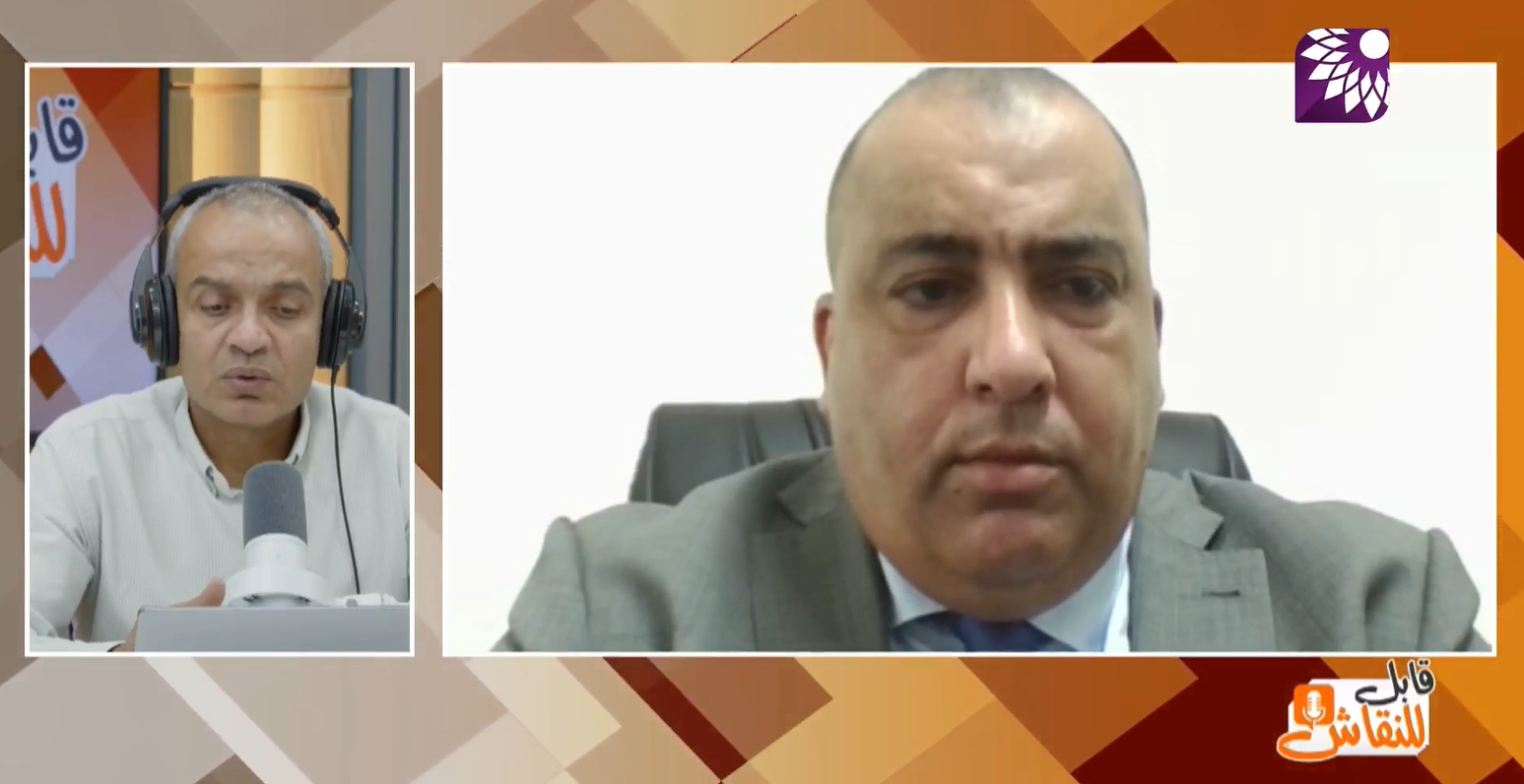
Dr. Rabeh Morrar on “Open for Discussion” on Al-Fajer Al-Jadeed TV
Dr. Rabeh Morrar emphasized that Palestine needs dozens of additional vocational and industrial schools to meet the growing demand for vocational education, noting that establishing and equipping a fully integrated industrial school may require up to USD 6 million.
He highlighted the importance of drawing on Jordan’s experience in implementing the BTEC system, a British international qualification developed by Pearson. The system enables students to obtain both a national qualification and an internationally recognized certificate and has successfully expanded to hundreds of schools in Jordan. He noted that this experience could provide a valuable model for further developing vocational education in Palestine.
In the same context, Dr. Morrar stressed that the adoption of the Palestinian National Qualifications Framework (NQF) represents a fundamental pillar for modernizing the education and training system, covering all educational levels from the first grade through doctoral studies. The framework aims to better align qualifications and skills with labor market needs while ensuring compatibility with regional and international frameworks.
He further noted that current financial challenges call for broader partnerships with local communities and the private sector. In this regard, he referred to the experience of Hebron, where existing schools are being utilized and some are gradually being transformed into vocational schools, with the Commission ready to contribute to equipping the required laboratories.
Key Highlights:
The need for an increasing number of vocational and industrial schools across all governorates.
The cost of equipping a single vocational school may reach USD 6 million.
Drawing on Jordan’s BTEC experience and assessing its potential application in Palestine.
National and international qualifications can enhance opportunities for further education and employment.
Adoption of the Palestinian National Qualifications Framework (NQF) as a key milestone in advancing the education and training system.
Aligning qualifications and skills with labor market needs.
Strengthening partnerships with the private sector and local communities.
The Hebron experience as a model for making effective use of existing schools.
For more, please visit the following link:
https://www.facebook.com/share/v/1D73pNbdcp/?mibextid=wwXIfr